What the 25 minutes measure
Most tools hand candidates a quiz and hand HR a personality label. Here the questions rest on structured psychological instruments, scored against the role in question. The output reads like a hiring brief.
This isn't a personality type
Sixteen box frameworks describe how someone shows up in general. Hiring needs something closer to behaviour under load: a missed deadline, disagreement with a manager, a project that changes scope halfway through.
The assessment tracks how reasoning holds when a problem has no clean answer, how focus shifts under time pressure, and which place in a team the person takes without being asked. Those patterns stay stable across the 25 minutes and map onto performance after the job starts.
What a candidate sees on screen
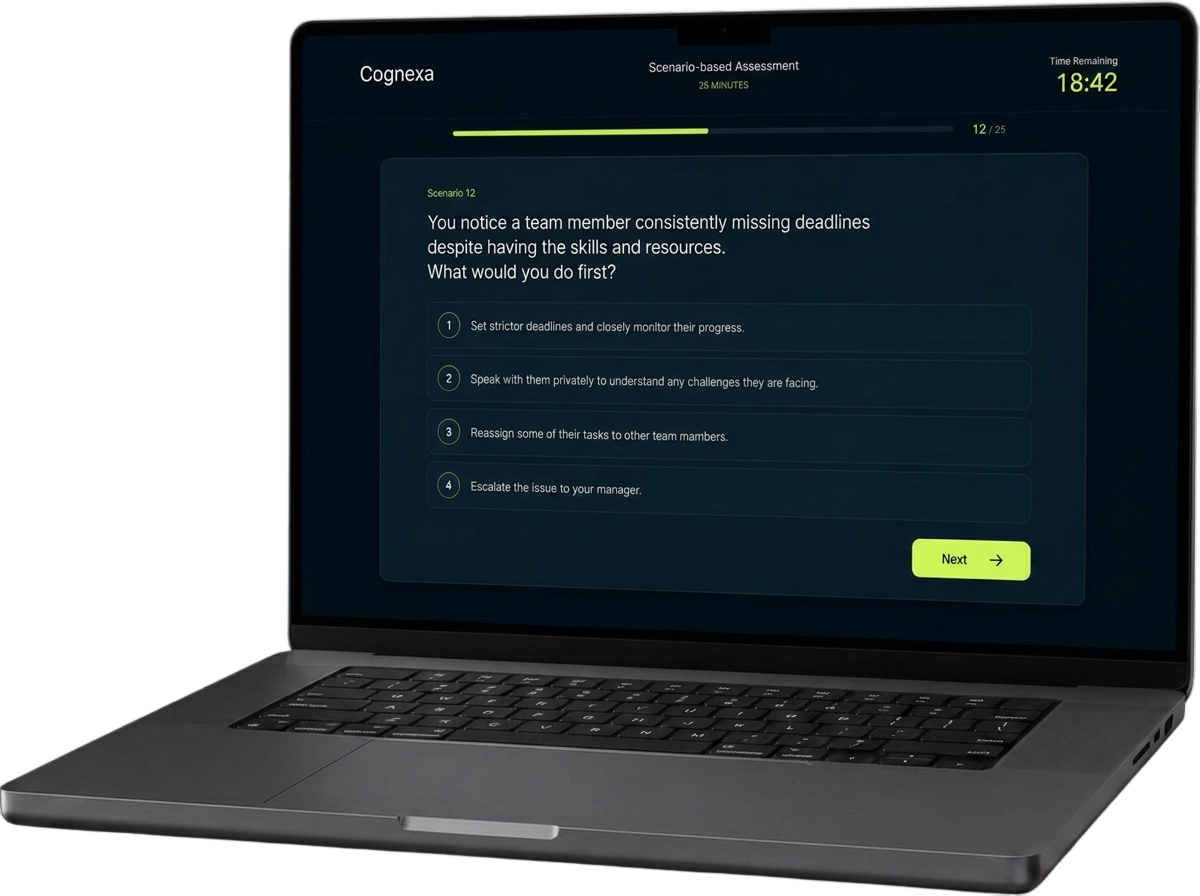
The session opens with scenario questions, the kind with no single correct answer. A candidate might spend three minutes on conflicting deadlines, then move into decisions under time pressure, where the clock itself is part of the measure. The feel sits far from a school exam; most people finish without that exam weight.
After submit, results go straight to the hiring manager. The candidate sees a short confirmation and a note on when next steps arrive. Scores stay on the hiring side. The wait rarely runs past a day.
What a finished report contains
The clearest way to understand the assessment is to see what it produces.
Where the method comes from
The instruments draw on structured selection research from the 1970s onward, refined across industrial and organizational psychology. The scoring model was checked against outcome data from thousands of completed hires across industries, tracking how results lined up with performance twelve months later.
The report gives the hiring manager a second, independently measured view to set beside the interview. The final call stays with the team.
What you pay for
Setup happens per role. After that, cost scales with how many candidates go through the assessment. Pay for results, skip the subscription logic.
Send the role and shortlist size. A written figure comes back before the first invitation goes out.
Get a figure for your next role